
PH Luzern, Pädagogische Hochschule

SORT

Sort · Order · Reflect · Transfer

Card-sorting tasks for self-regulated learning in the mathematics classroom

Grades 7 and 9Lower secondary level. More topics are being added.
In the browserNo login, no installation, on any device.
In groupsTwo to four learners at one device.
Free to usePublished as Open Educational Resources.

The idea

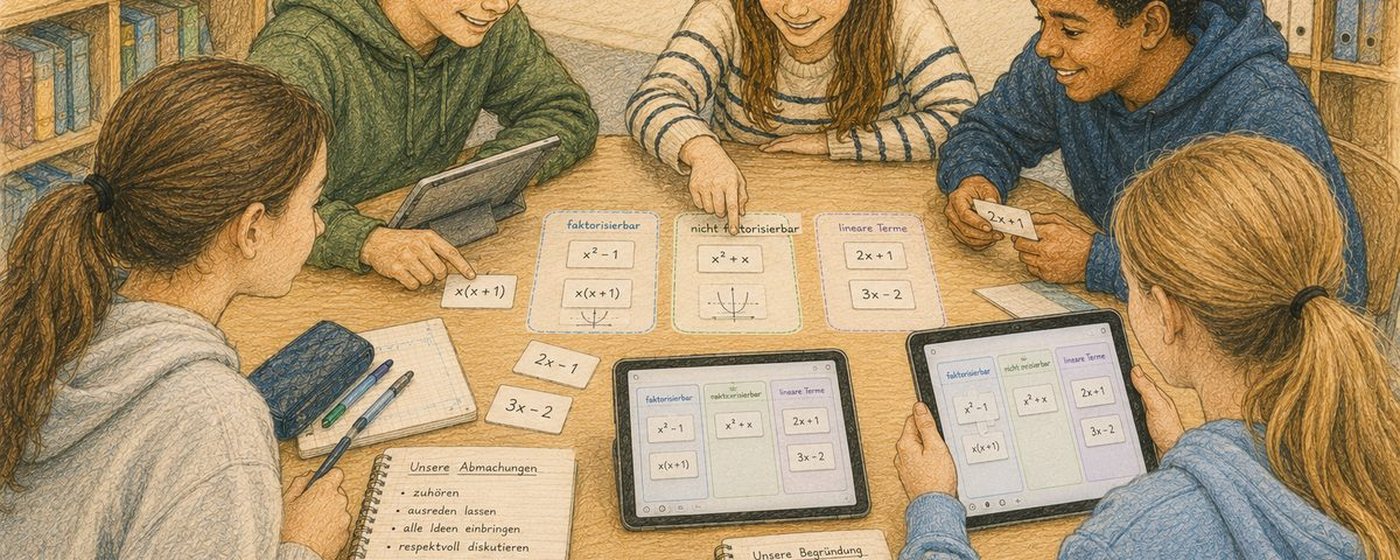
A class is given a set of cards – expressions, figures, concepts, claims – and is asked to order them. Which ones belong together? By what criterion, exactly? And where does that criterion stop holding?

The answer is not the finished arrangement, it is the reasoning behind it. That is why the cards are laid out by two or three learners who talk while they do it. They have to agree, to check their approach and, if need be, to overturn it – which is what the research literature calls self-regulated learning.

Everything runs in the browser. No account, no installation.

The tasks

Try out a sorting task

Similarity – one task in English, to try out right away. It runs in the browser, without a login.

Open the task →

How a lesson runs

Sort them, make your case, justify it

The group opens the link and sees the cards scattered across a surface. They push them around, group them, discard and start again. The task deliberately does not say how many groups there are in the end – that is for the learners to decide and to defend.
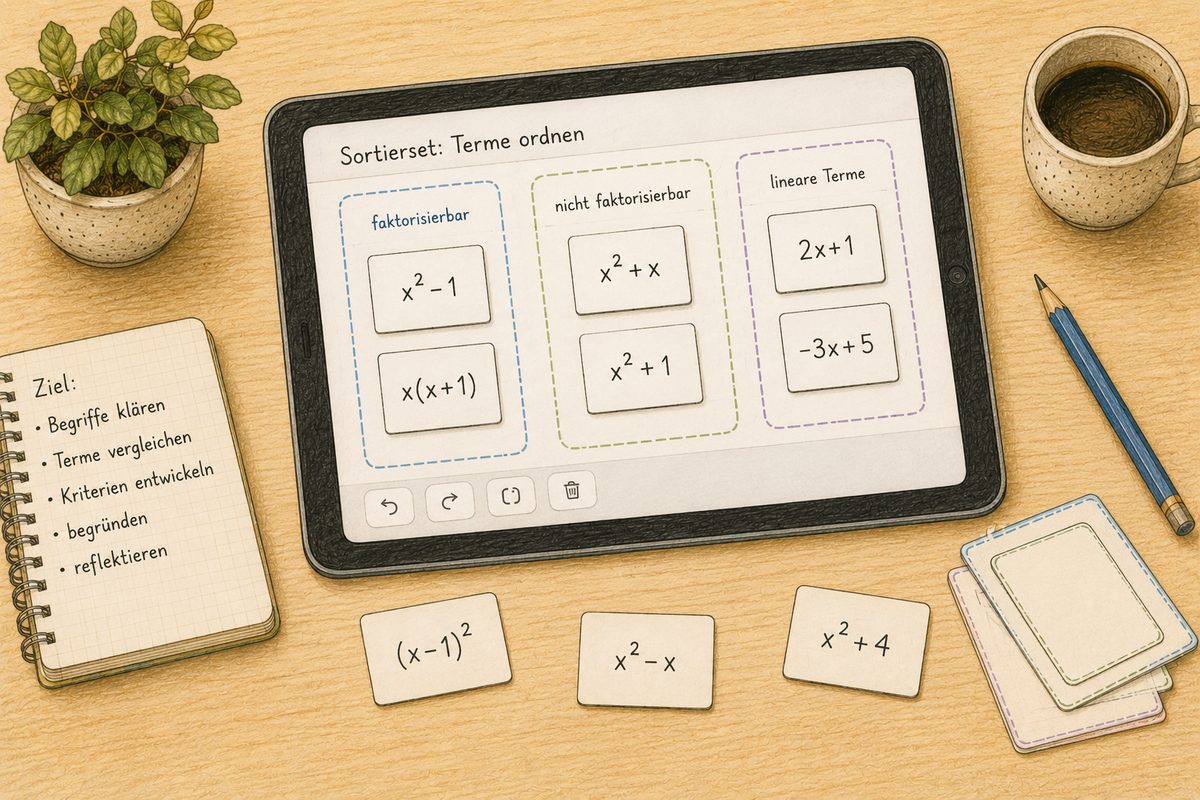
A sorting surface: three zones, and cards that do not yet belong to any group.

How the cards are built

One set of cards, several tasks

Each topic has a single set of cards from which different tasks can be posed: group them freely, find groups of three, decide always–sometimes–never. Some cards are there on purpose to target a common misconception – they give the discussion something to work on.
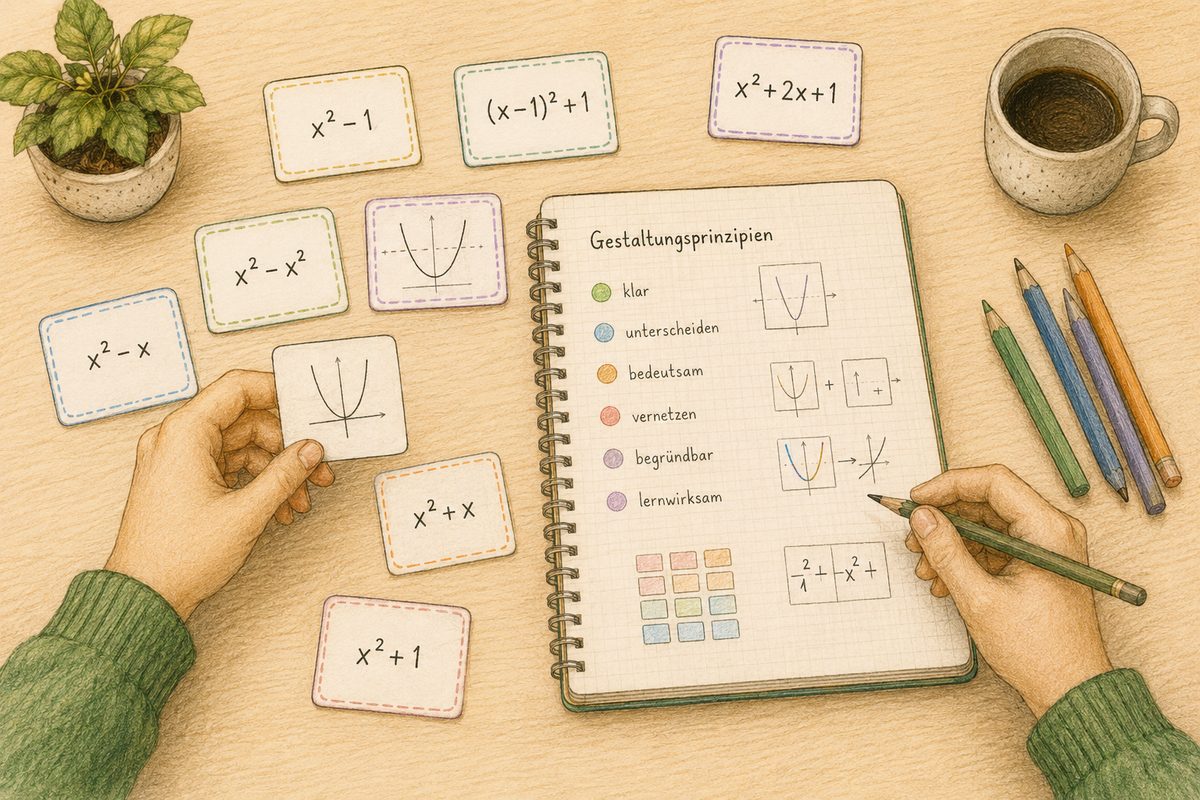
What we measure a card against: clear, distinguishable, meaningful, connected, justifiable, productive.

Afterwards

What was laid out stays laid out

Paper cards are collected at the end of the lesson, and with them the work disappears. A digital arrangement can be saved as an image, compared between groups and taken up again in the next lesson. That is exactly what the whole class discussion grows out of.
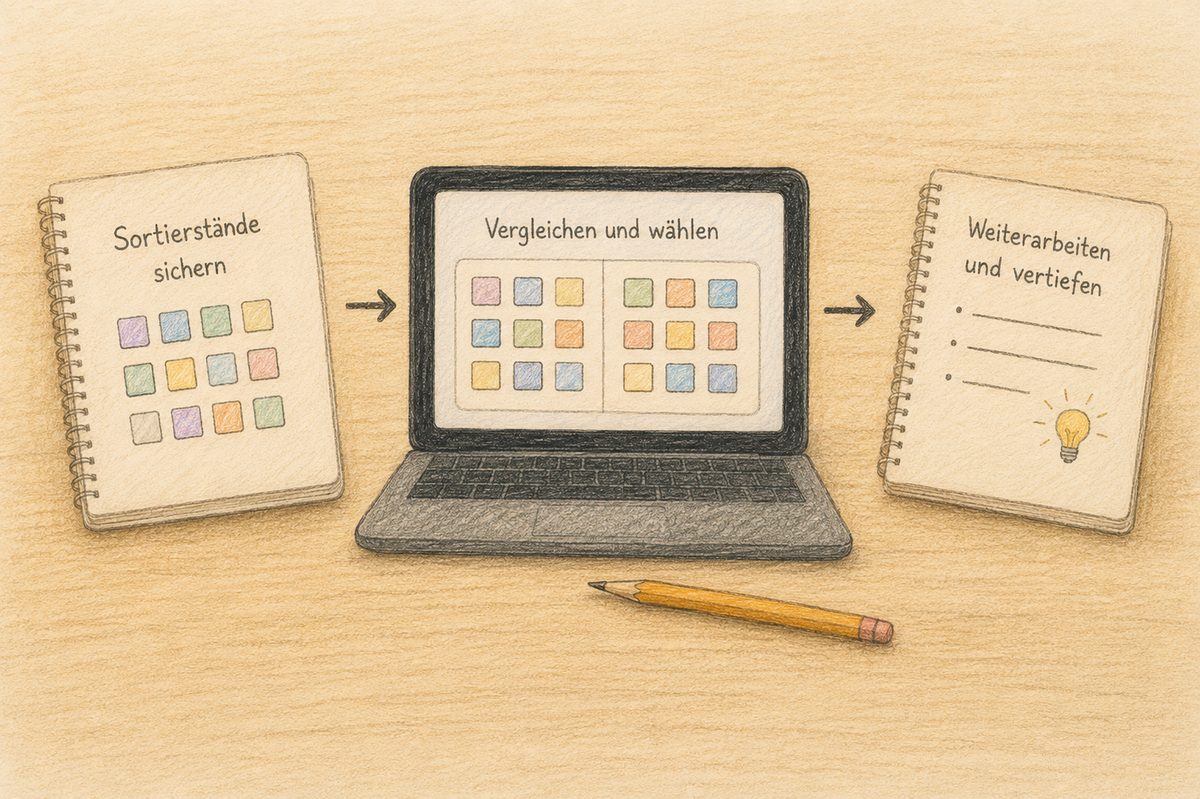
Save, compare and keep working with the arrangements.

Still in progress

Building your own sets of cards

Two things are being built right now. First, teachers should be able to put together the selection of cards they need – as a sorting surface for the browser or as a printing template for the table. And second, an assistant that helps in designing card sets for further topics: not an arbitrary task generator, but one that knows the design principles from the classroom trials and asks about them.
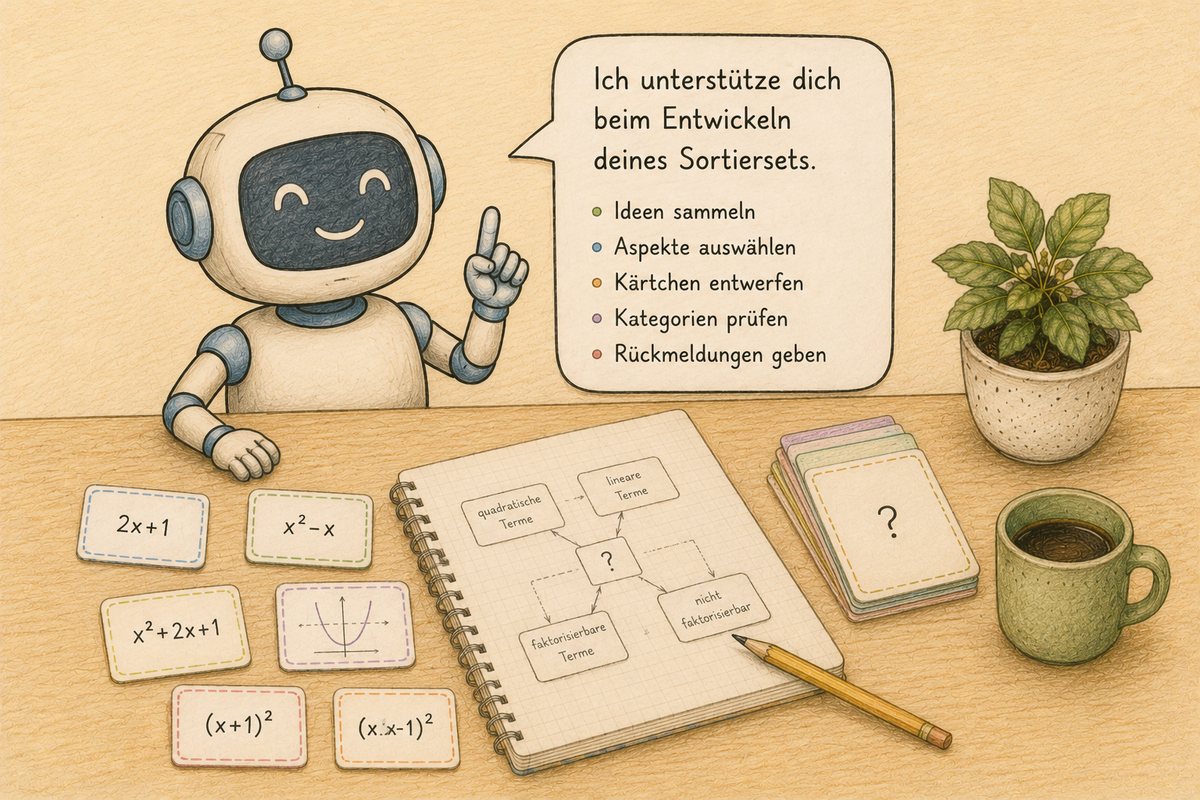

The assistant walks through the questions that make a good set of cards.

The project behind it

SORT stands for sort, order, reflect, transfer – the acronym holds in German and in English alike. The project runs in 2026/27 at the Lucerne University of Teacher Education, at the Institut für Fachdidaktik MINT und Nachhaltigkeit.

The tasks are not written at a desk alone: they are tried out in lessons at Kantonsschule Reussbühl and at Sekundarschule Hochdorf. What works there stays; what does not gets rebuilt. Out of these trials come design principles, a guide for teaching – and the tasks on this site.

We are three lecturers in mathematics education at the Lucerne University of Teacher Education, and we develop, trial and evaluate together.

Henrike AllmendingerHenrike Allmendinger
Luzia ChristenLuzia Christen
Maurus KüttelMaurus Küttel